

Search

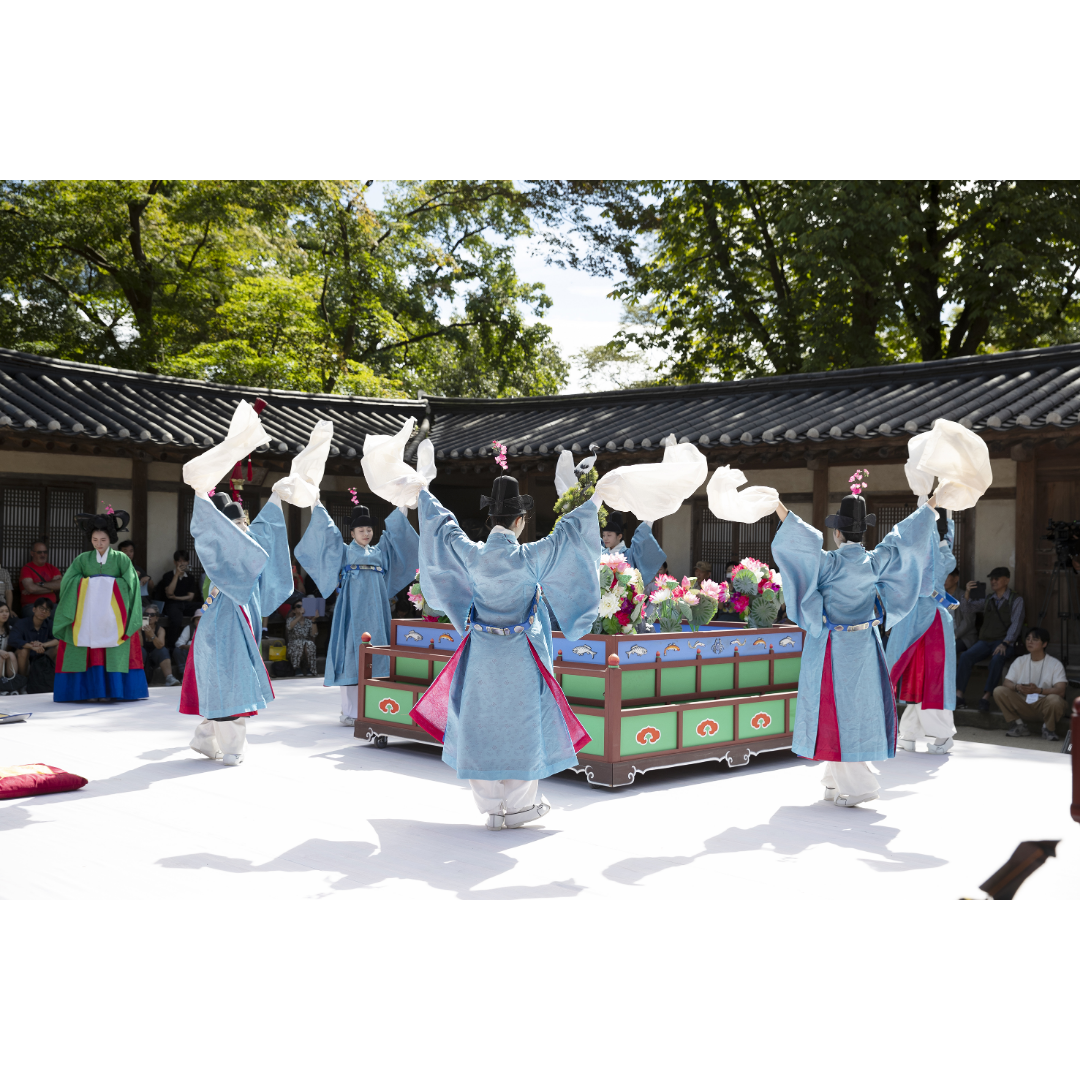
World Ethnic Dance Institute Restores the Yeongyeongdang Jinjakrye from the Muja Year of King Sunjo at Changdeokgung Palace
At 11 a.m. on November 3 and 4, the World Ethnic Dance Institute, affiliated with the School of Dance led by Ahn Deok-gi, together with the Changdeokgung Management Office of the Royal Palaces and Tombs Center under the Korea Heritage Service, will present a restored performance of the Yeongyeongdang Jinjakrye from the Muja year of King Sunjo’s reign. The 60-minute performance will take place at Yeongyeongdang Hall in the Secret Garden of Changdeokgung Palace.
Jinjakrye is a Joseon-era royal ritual in which liquor was offered to the king at a royal banquet as a gesture of respect. This restored performance is set in June 1828 of the lunar calendar, when Crown Prince Hyomyeong hosted the Jinjakrye at Yeongyeongdang to mark the 40th birthday of his mother, Queen Sunwon. Based on the Sunjo Muja Jinjang Uigwe, the royal protocol record of the event, the World Ethnic Dance Institute will reconstruct the dance, music, costumes, and ceremonial procedures of the original ritual. The performance conveys the king’s filial devotion to his mother while also embodying the Joseon ideal of achieving harmony and order through ritual and music.
This year, 10 of the 17 court dances recorded in the Sunjo Muja Jinjang Uigwe will be performed. On November 3, the program will feature Cheopseungmu, Musanhyang, Choihwamu, Hyangryeongmu, and Cheongwangho, followed by Mangseongmun, Gongmakmu, Yeongji, Chun-aengjeon, and Bakjeopmu on November 4. Several works, including Cheopseungmu and Choihwamu, are group dances performed by six dancers, while Musanhyang and Chun-aengjeon are solo dances.
Emeritus Professor Heo Young-il oversaw the restoration of the performance. Professor Heo expressed his hope that presenting the restored ritual in its original historical setting would help transmit the spirit and artistic value of Korea’s cultural heritage.
The performance is free of charge and open to all visitors to the Secret Garden of Changdeokgung Palace.